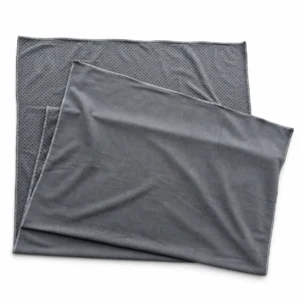
Spread a beach towel out and the whole design is visible. Fold it for a shop shelf and only a small part remains. A successful custom towel needs to work in both views.
That is a useful starting point for resort shops, swimwear brands and summer merchandise programs. Before approving a print, consider the towel’s finished size, fabric feel, logo position and packed presentation together. Yujia’s coastal YJ-304 and tropical YJ-305 designs show two ways to develop a coordinated microfiber beach towel collection.
Choose the size around the intended use
A towel for a compact travel collection may need a different format from one developed for a resort lounger. Start with what the customer is expected to do with it: dry off after a swim, wrap up, spread it on the sand or carry it in a day bag.
The YJ-304 and YJ-305 product pages propose three development sizes. Treat these as starting points for discussion, with the final dimensions and tolerances agreed for the order.
| Proposed size | Development direction | Check before approval |
|---|---|---|
| 70 × 140 cm | A compact format | Coverage for the intended customer and the packed dimensions |
| 80 × 160 cm | A beach format | Wrap coverage, print proportions and the folded retail view |
| 90 × 180 cm | A larger format | Fit on the intended lounger, finished weight and packaging size |
| Custom dimensions | A format built around your brief | Production feasibility, tolerances and artwork adjustments |
Size labels such as “large” and “oversized” are less useful than actual measurements. Put the finished length and width on the specification sheet, and agree on how they will be checked after the proposed wash routine.
Define the microfiber construction before judging the print
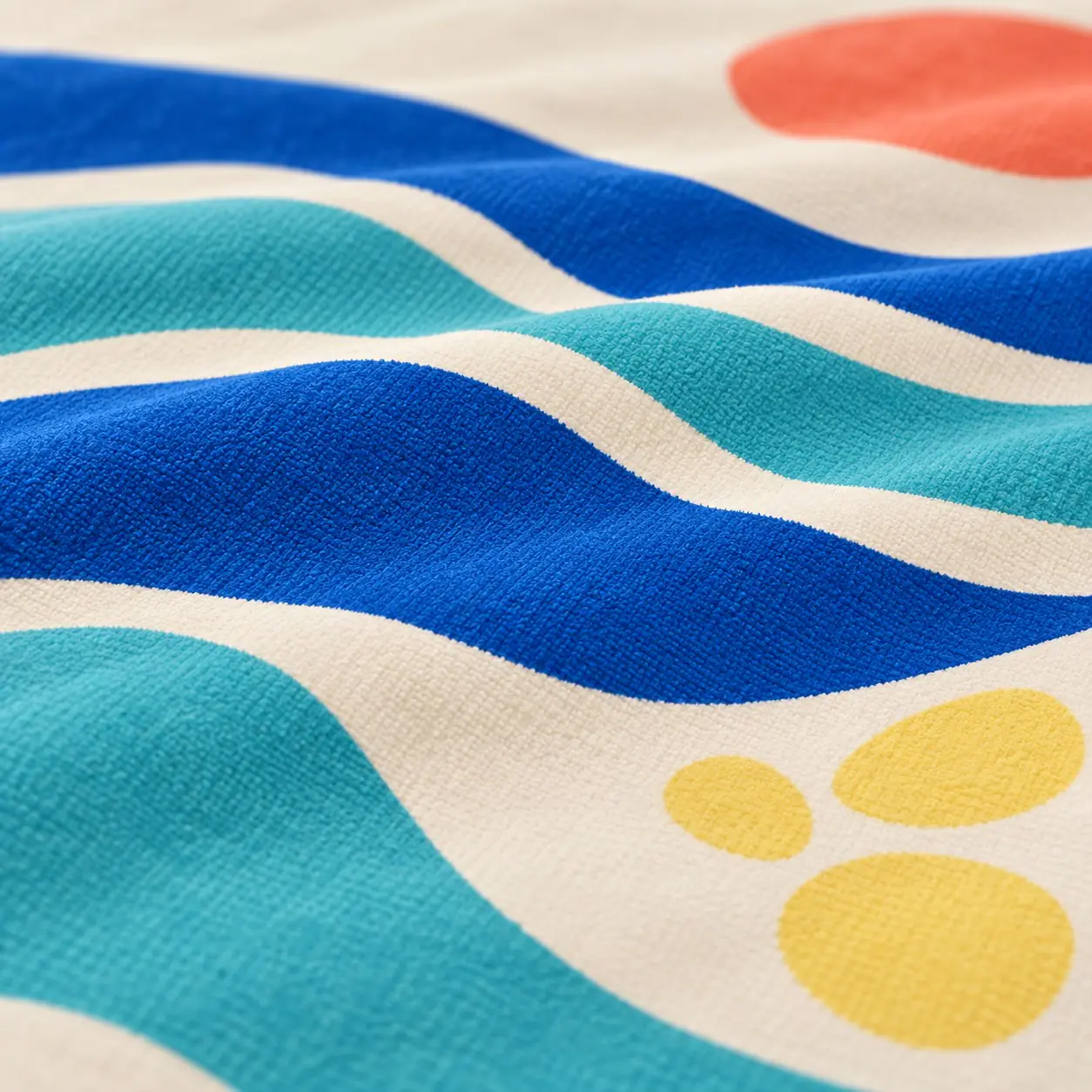
Both featured models are listed as microfiber beach towels. Their exact fiber composition, fabric weight, surface finish and reverse construction are selected during development. The word “microfiber” alone does not describe every part of the finished towel.
Ask to handle a fabric sample and then a finished towel. Compare the feel of both sides, the edge finish and the space the towel takes up when folded. If the retail brief calls for a particular packed size or finished weight, write that requirement down rather than assuming it from a photograph.
GSM means grams per square meter. It helps describe fabric mass, but it does not establish drying speed, absorbency or sand release. If those properties matter to the product offer, agree on how to evaluate them for the selected construction.
Two print directions for a beach towel collection
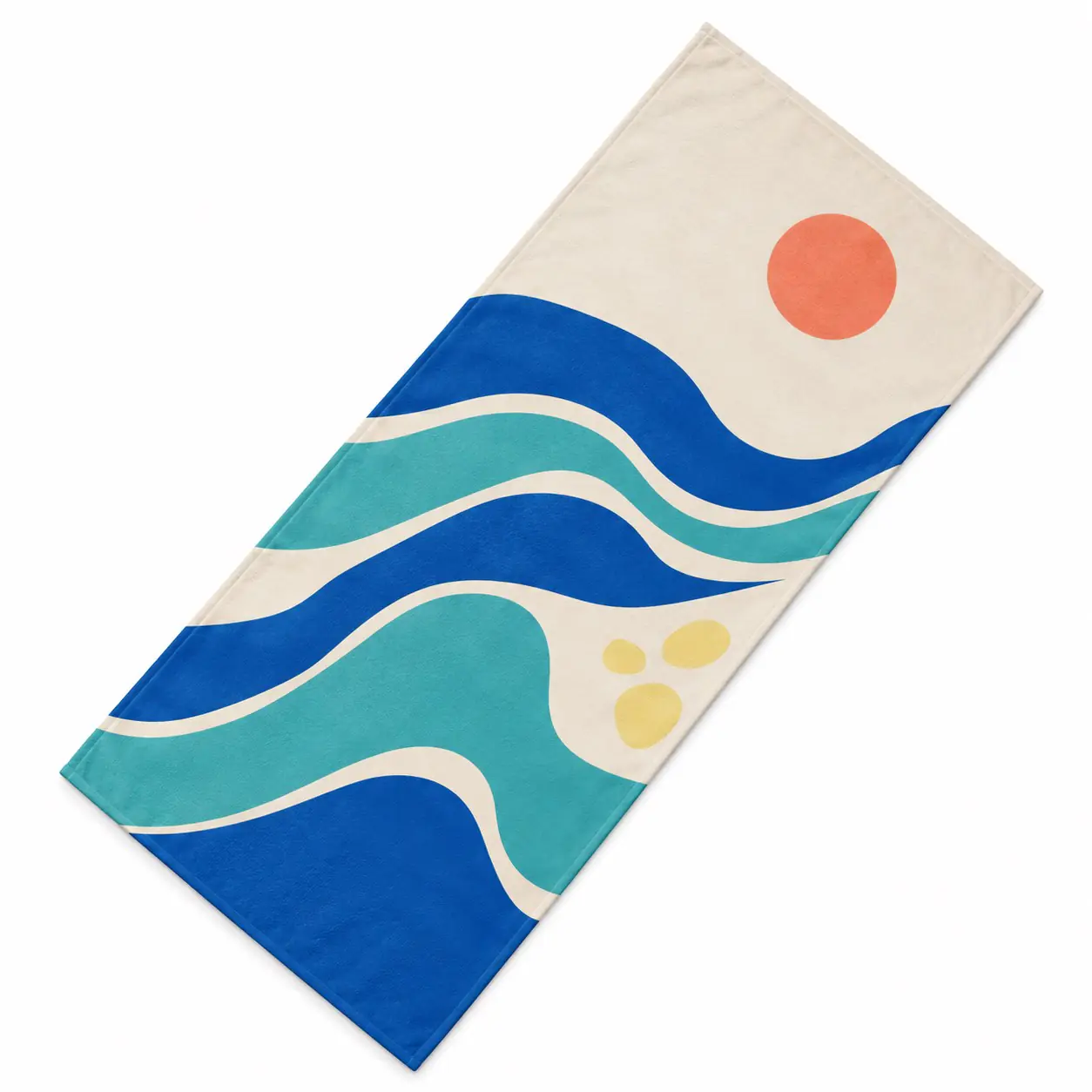
Coastal waves: YJ-304
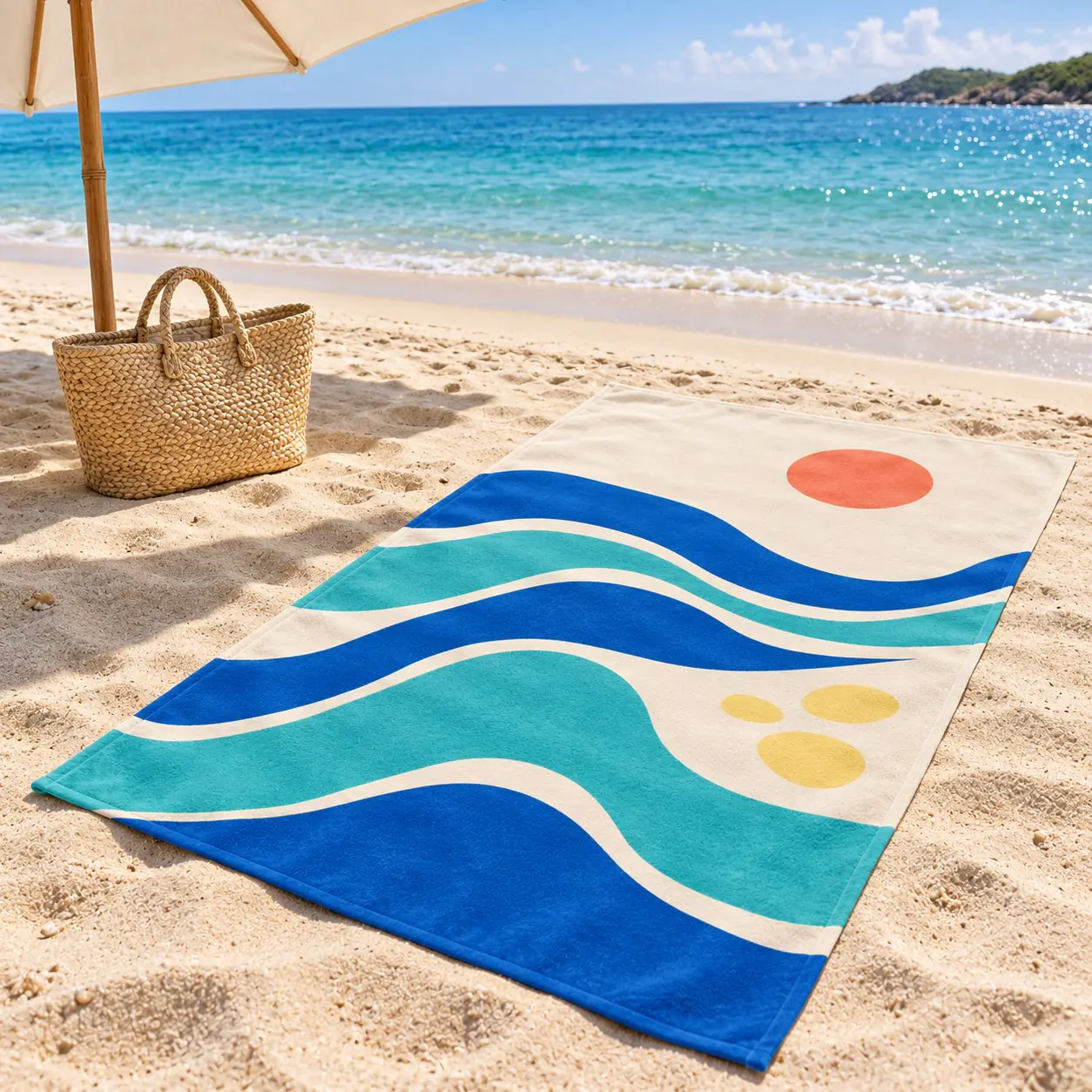
The YJ-304 custom printed microfiber beach towel combines broad blue and aqua curves with an offset orange sun and small yellow pebble shapes. The large elements give the unfolded towel a clear visual direction.
When adapting this type of layout, review the spacing between the main graphic elements and the edges. A change in towel proportions may call for repositioning the sun or widening a curve, rather than stretching the complete design. Keep a separate approved artwork file for each finished size.
Tropical botanicals: YJ-305
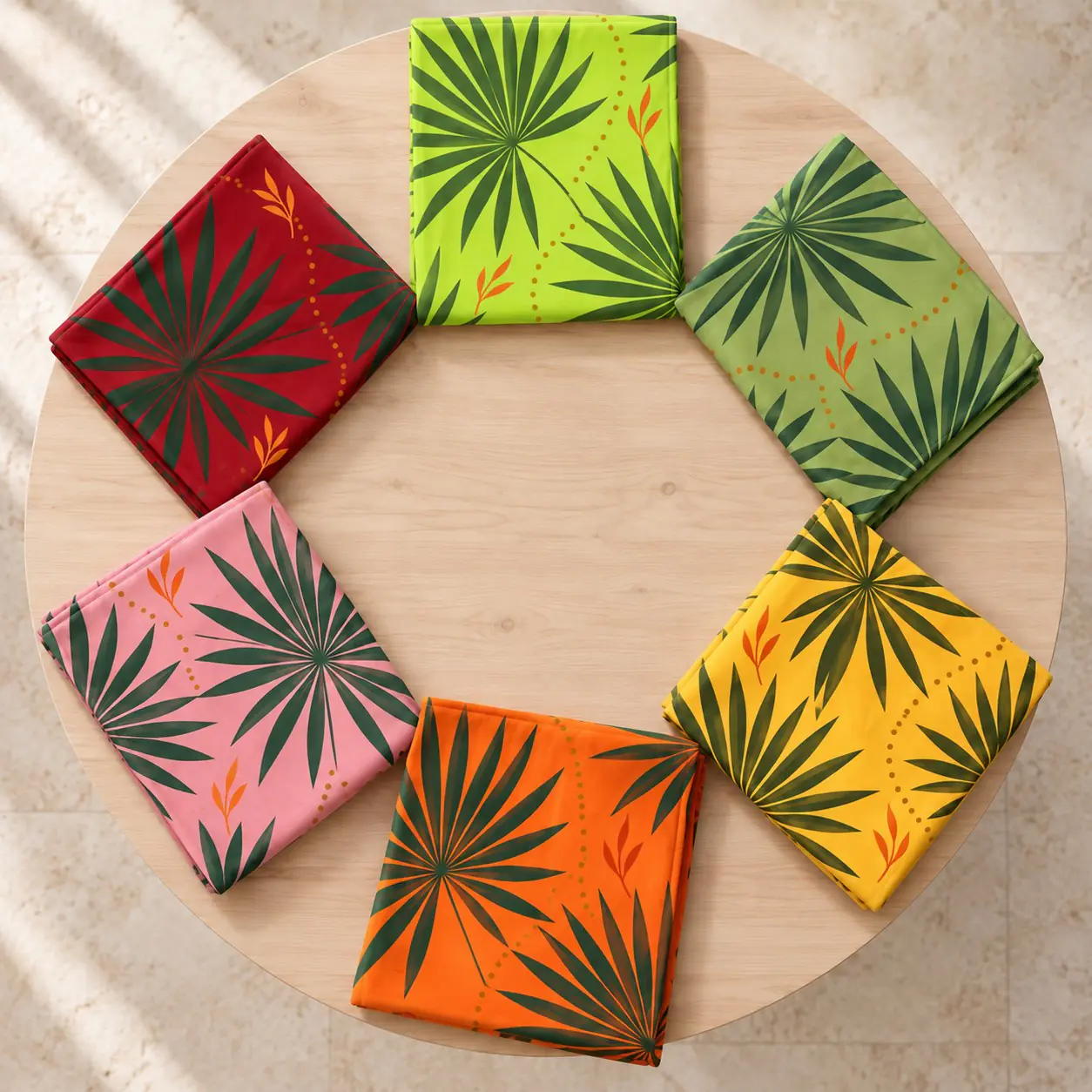
The YJ-305 tropical print microfiber beach towel takes a different approach: oversized fan-palm leaves, slender botanical sprigs and dotted accents. Its illustrated color collection explores lime, herbal green, gold, orange, pink and deep red.
A botanical design can hold a collection together while the background colors change. Compare each colorway on the selected fabric, paying attention to the contrast between leaves, fine sprigs and background. A detail that reads clearly on a light color may need adjustment on a darker version.
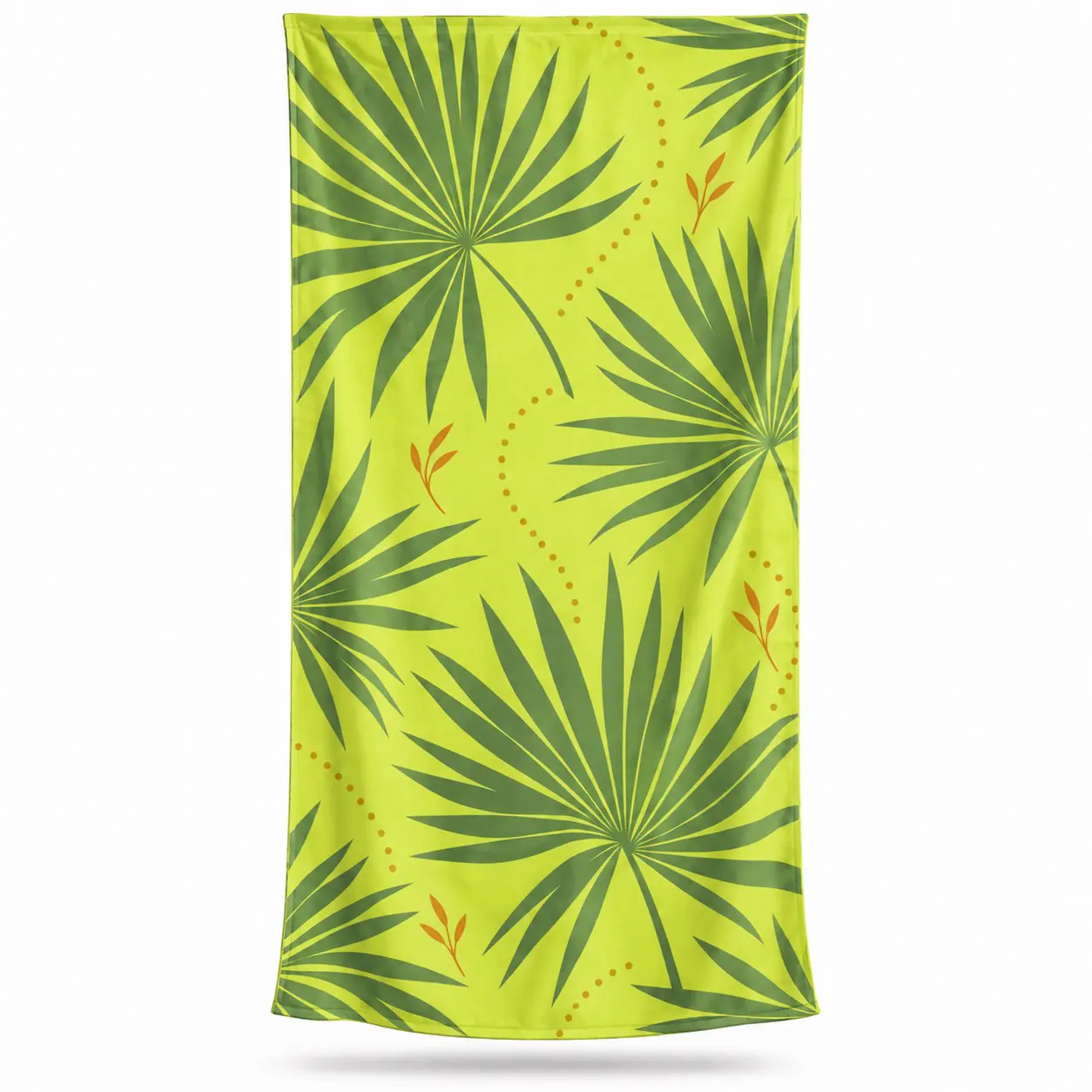
These visuals show design directions, not confirmed stock colorways. Supply artwork you own or are authorized to use, along with color references and placement instructions. Final color acceptance should be based on the approved physical sample.
Check the logo in the folded view
Logo placement is easy to approve on a flat artwork file and easy to overlook in packaging. Try the proposed fold before deciding where the branding belongs. A logo placed near one end may disappear inside a roll; a corner label may be covered by a paper sleeve.
Yujia’s featured product pages offer printed branding and label options for discussion. Choose the application with the fabric and artwork in mind. Ask for a sample showing the actual logo size and position, rather than judging placement from a screen mockup alone.
For a resort collection, the towel design and the destination name can be reviewed as one composition. For a swimwear label, compare the towel colors alongside the garments or accessories it will be sold with. In either case, check both the full towel and the visible panel in its retail fold.
Approve the towel and its packaging together
A paper sleeve, pouch and retail box each present the towel differently. The right choice depends on the display plan and the finished product. Check the packaging around the approved sample, including the fold, label visibility and space available for care information.
Use a short approval record to keep the final decisions in one place:
- Construction and size: identify the fabric, reverse, finished dimensions, tolerances and edge finish.
- Artwork: record the version, print orientation, scale, front and reverse treatment, and agreed edge allowances.
- Color and branding: approve the physical color reference, logo application and label position.
- Care and performance: review the proposed care instructions and agree on evaluation criteria for any advertised properties.
- Packaging: approve the packing method, sleeve or pouch dimensions, printed information and quantities per carton.
For poolside or beach use, discuss the relevant exposure and laundering conditions with the supplier. Ask for suitable verification if the retail copy will promise colorfastness, drying performance or a particular sand-release result. A styled beach image cannot establish those properties.
Plan the schedule from the date the goods are needed at the destination. Allow for artwork changes, sample approval, production, inspection and transport. MOQ, sample charges and production timing for YJ-304 and YJ-305 are quoted according to the project brief.
Custom beach towel questions
Which size should I choose for a custom beach towel?
Start with the intended use and customer. Yujia proposes 70 × 140, 80 × 160 and 90 × 180 cm as development options for the featured models, with custom dimensions available for review. Check coverage and packed size using a finished sample.
Can the artwork be printed on both sides?
The YJ-304 listing says single- and double-sided options are assessed against the selected fabric. Specify what you want on each side and confirm the method, appearance and sample before approving production. Do not assume a printed face means a printed reverse.
Are microfiber beach towels automatically sand-free or quick-drying?
No such guarantee follows from the material name alone. The featured YJ-304 and YJ-305 concepts do not establish those performance properties. If they are required, agree on the selected construction, test conditions and acceptance criteria.
What information is needed for a quotation?
Provide the model or design direction, intended use, dimensions, fabric requirements, artwork, quantities by color or design, packaging and destination delivery requirements. This gives the supplier a clear basis for pricing and sampling.