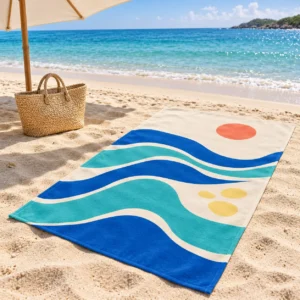
How to Choose a Yoga Towel: Grip, Texture and Fit
A yoga towel can look right in a product photo and still feel wrong on the mat. The useful questions are practical: does it cover the mat properly, how does each side behave, and what changes after washing?
For a studio, retailer or private label brand, those details belong in the buying brief before colors and packaging are approved. This guide uses Yujia’s silicone-dot and waffle weave models to explain what to compare and how to turn a promising sample into a clear product specification.
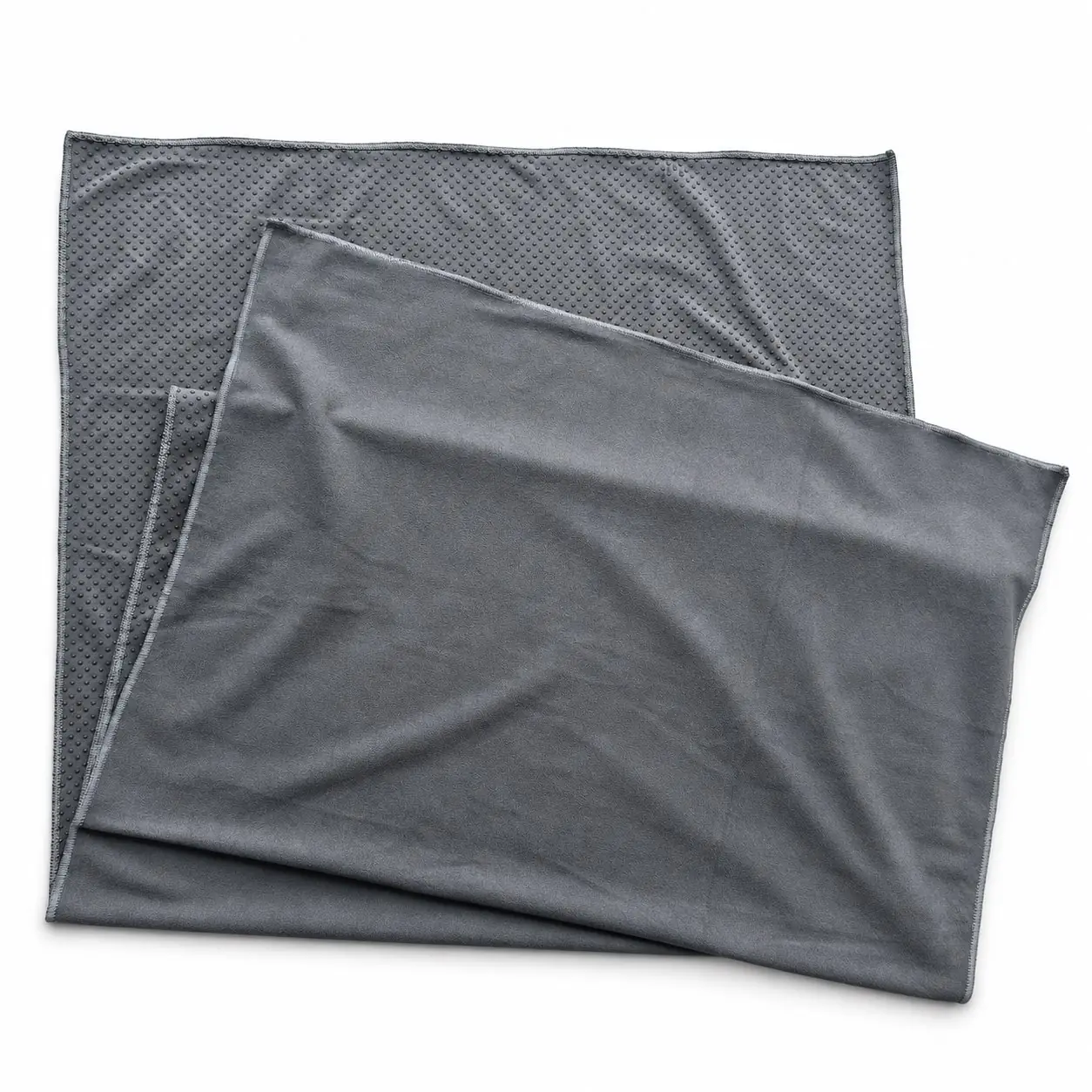 A folded towel makes it easier to compare the fabric face with the dotted reverse.
What should you look for in a yoga towel?
Start with the intended mat and practice setting. Compare the face fabric, reverse construction, finished dimensions and care requirements. Then evaluate a finished sample on that mat, before and after washing. A texture or backing name alone does not establish grip, absorbency or durability.
In this guide
- Silicone dots and waffle weave: what is the difference?
- Choose the fit and fabric specification
- Check a sample before placing an order
- Plan branding and packaging
- Agree on care instructions
- Common questions
Silicone dots and waffle weave describe different features
Silicone dots describe an added grip pattern. Waffle weave describes a textured fabric structure. They are not opposite ends of a single quality scale, and the presence of one does not tell you everything about the other side of the towel.
Silicone-dot yoga towels
The YJ-101 yoga towel with silicone nubs shows a dotted surface alongside a plain fabric face. For a mat-facing dot layout, ask how the towel behaves on the actual mat your customers will use. The towel-to-mat contact and the hand-to-fabric contact are two separate things to assess.
Include dot size, spacing, coverage and attachment condition in the sample review. Check whether the towel lies flat, whether its edges lift, and whether it needs frequent repositioning during the intended practice. More dots should not automatically be treated as proof of better performance.
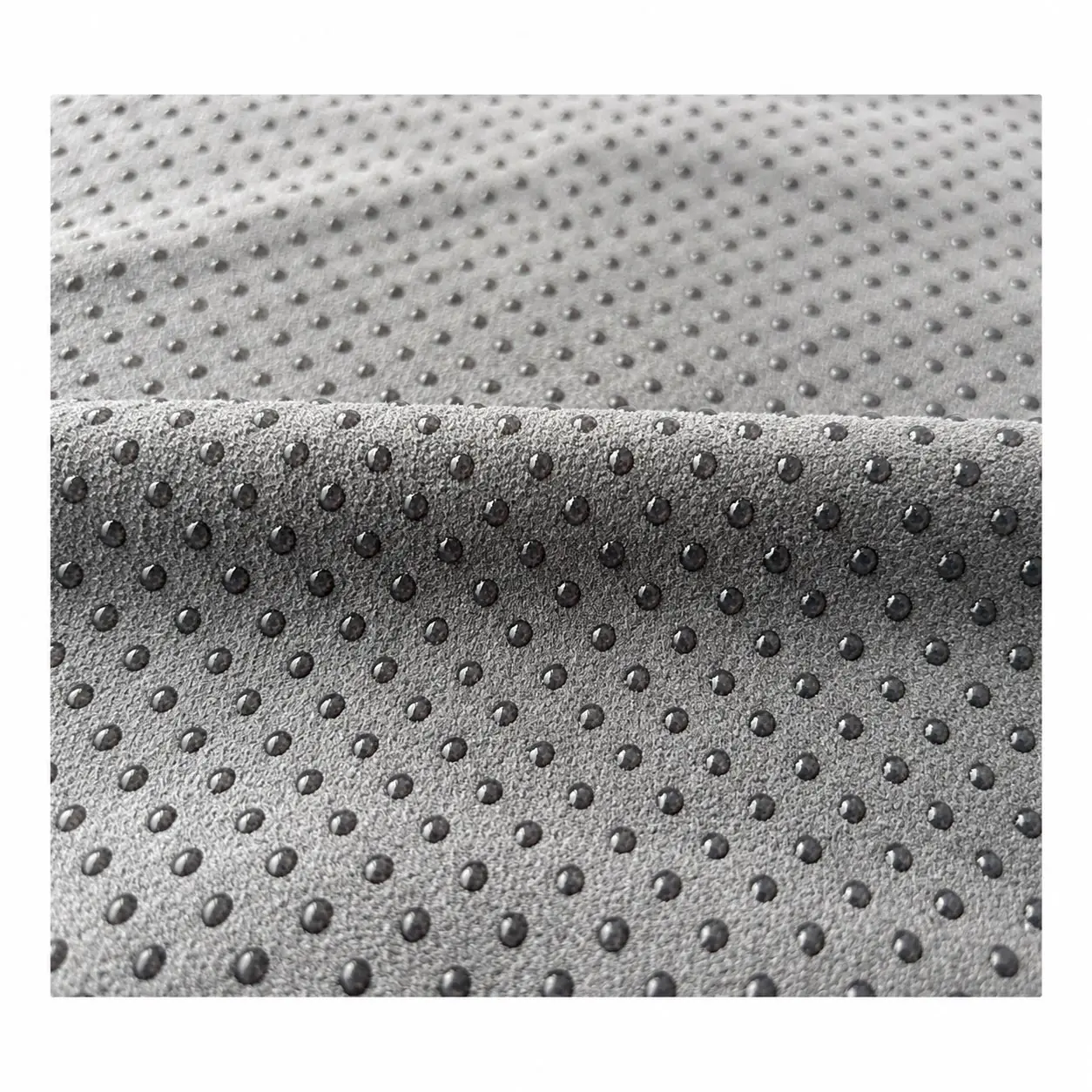
Dot size, spacing and coverage belong in the sample specification.
Waffle weave yoga towels
The YJ-102 waffle weave yoga towel has a visibly textured surface. Its purple sample also shows contrasting pink edge stitching, a detail worth considering when developing a coordinated collection.
Handle the fabric rather than choosing from texture photographs alone. Compare how it feels against the skin, how it folds and how it sits over the intended mat. If you need a particular reverse construction, include that requirement explicitly. Waffle texture by itself is not a non-slip specification.
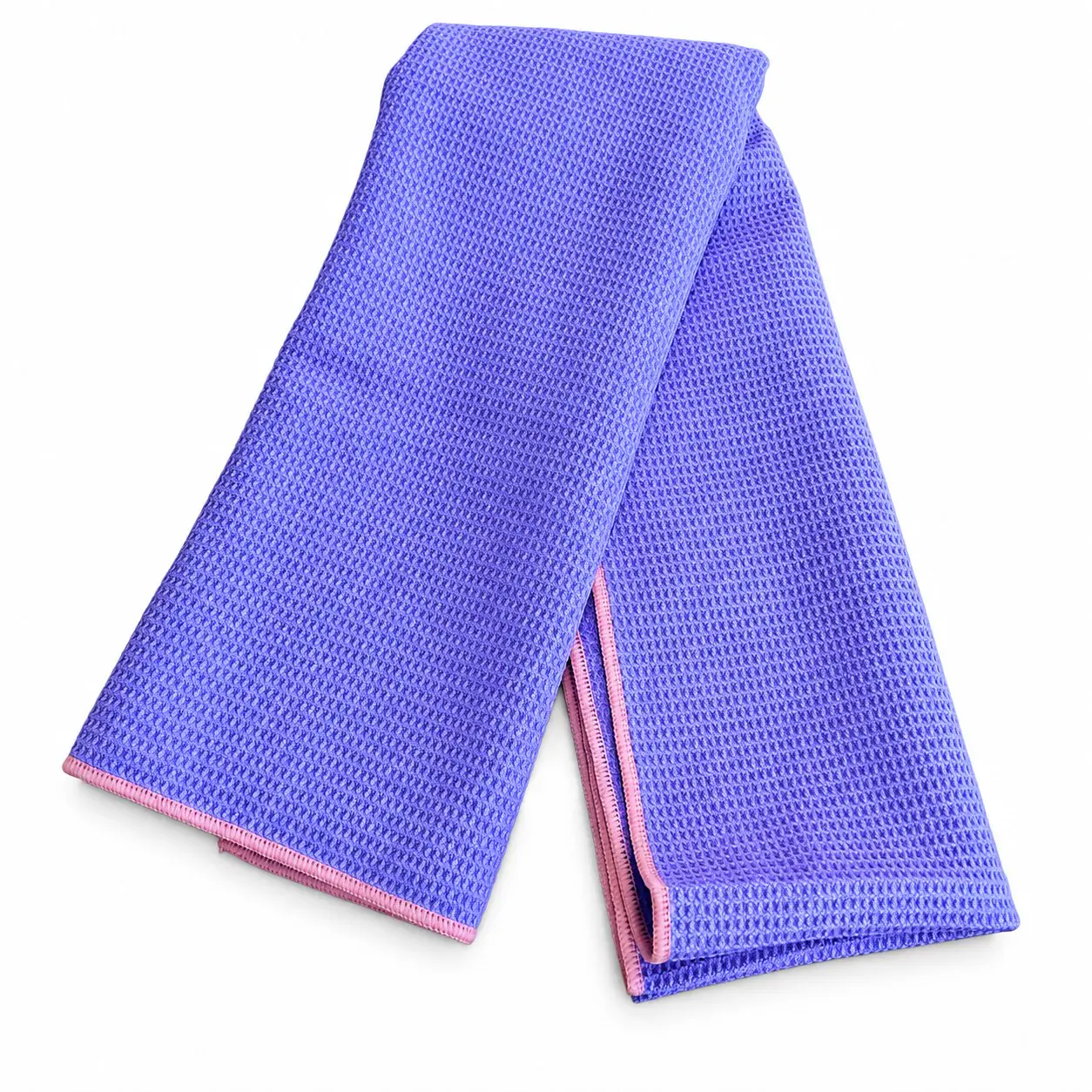
Waffle texture describes the fabric surface; backing construction is a separate choice.
What to compare when selecting a yoga towel
Feature What it tells you What to check in a sample
Silicone dots An added pattern on the towel surface Position, spacing, attachment and contact with the intended mat
Waffle texture The visible fabric structure Surface feel, folding, reverse construction and behavior after washing
Finished dimensions The coverage of the towel Length, width, tolerance and fit after the agreed care cycle
Edge finish How the perimeter is constructed Stitch consistency, loose threads, bulk and curling
Choose the fit and fabric specification together
Measure the mat you want to cover. Record its length and width, then decide how much coverage the towel should provide. Avoid relying on labels such as “standard” or “oversized”: the supplier and the buyer may have different dimensions in mind.
For example, if your mat measures 61 × 183 cm, use those measurements as the starting point for the brief. This is an example, not a fixed Yujia product size. Agree on the finished towel dimensions, acceptable tolerance and the way fit will be checked after washing.
Fabric weight needs similar care. GSM means grams per square meter. It describes mass per unit area, but it does not identify the fiber blend or prove how quickly a towel dries. For a towel with added silicone, clarify whether a quoted weight refers to the fabric alone or the finished construction. Recording both fabric GSM and finished piece weight avoids an ambiguous comparison.
Use a sample checklist before placing an order
A sample review is more useful when everyone checks the same things. Ask the supplier to identify the sample version and keep a matching reference for the order.
- Confirm the construction. Record the fiber composition, face texture, reverse, edge finish and any added grip pattern.
- Check the fit. Measure the towel and place it on the intended mat. Look for uncovered areas, excess overhang and raised edges.
- Evaluate the intended use. Follow the supplied use instructions and assess both fabric contact and towel movement. Record the mat type and conditions so comparisons are meaningful.
- Wash according to the proposed label. Once dry, recheck dimensions, color appearance, stitching, surface feel and any silicone attachments.
- Approve the finished presentation. Review the logo, label position, folded size and packaging together.
If fast drying or a specific grip claim will appear on your retail packaging, agree on a suitable evaluation method and acceptance criteria before printing it. A favorable first impression is useful feedback; a repeatable assessment is a stronger basis for a product claim.
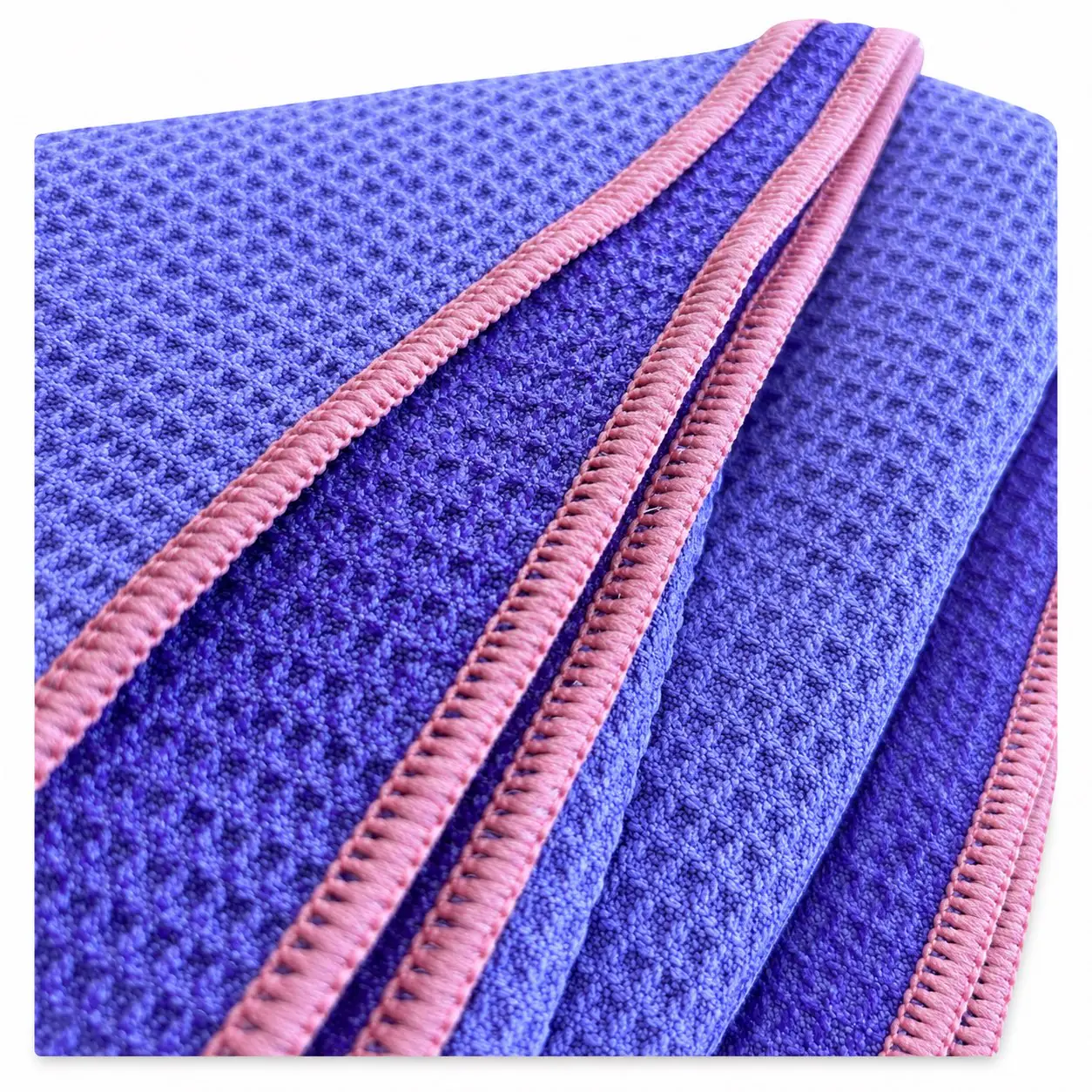
Inspect the edge finish as well as the main fabric when approving a sample.
Plan custom branding around the towel
Choose the towel construction before finalizing artwork. A logo near the edge, an all-over print and a woven label each create a different presentation. Ask to see the selected branding method on the actual fabric, including its placement when the towel is unfolded and packed.
Send a physical color reference or agreed color standard with your artwork. For the purple waffle example, the edge-thread color is a separate decision from the main fabric color. Include both in the approval record if that contrast is part of your design.
Packaging should be checked around the finished sample. A paper band needs the correct folded dimensions; a pouch needs enough room for the agreed packing method. Confirm quantities by color or design, packaging details, sample charges and production timing in the quotation.
Agree on care instructions before production
Do not assume every yoga towel in a collection can use the same care label. The fabric, print, stitching and any backing need to be considered together. Ask for washing and drying instructions for the final construction, then use those instructions during sample evaluation.
For studio use, check whether the proposed care routine fits your laundry process and available drying time. For retail, keep the instructions clear enough for a customer to follow at home. Include any restrictions on heat, bleach or fabric softener only as confirmed for that product.
Common questions about yoga towels
Can a yoga towel replace a yoga mat?
A textile yoga towel is generally used over a mat. Do not assume it provides the cushioning or floor contact of a full mat. Select the supporting mat separately and evaluate the combination for the intended practice.
Is a waffle weave towel better than a silicone-dot towel?
There is no universal winner. Waffle weave describes the fabric texture, while silicone dots describe an added surface pattern. Compare the complete construction, feel, fit and care requirements of the samples you are considering.
Should a yoga towel be dampened before use?
Follow the instructions for the selected towel. Do not assume that every fabric or backing needs dampening. If the product is intended for dry and damp use, include both conditions in the agreed sample evaluation.
What should I send when requesting custom yoga towels?
Send the intended use, mat dimensions, preferred construction, colors, artwork, quantities by design and packaging brief. Add any care or performance requirements. These details help the supplier quote the product you actually need.